
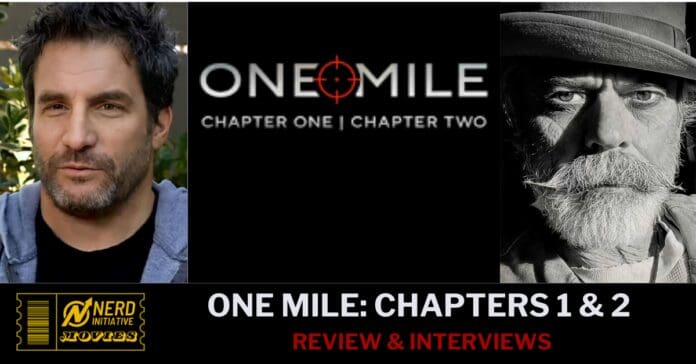
Director Adam Davidson has helmed two-parter One Mile, which is currently available for purchase or rent on streaming platforms. The films star Ryan Phillippe as Danny Beckett, is an ex-special forces specialist who is trying to reconnect with the daughter he’s neglected throughout his career. To this end, he volunteers to take Alex (Amélie Hoeferle) to visit several colleges in which she’s expressed interest. Along the way, they find themselves at a campsite just off the One Mile marker on a desolate road where they are besieged by the citizens of a reclusive community, led by Stanley Dixon, played C. Thomas Howell.
One Mile: Chapter One
One Mile: Chapter One plays out like an R-rated, brutal episode of Macgyver with the survival thriller feel of Deliverance or the Wrong Turn reboot of 2021. Phillippe is serviceable as an action hero while still able to elicit empathy in his performance as a father. The visible switch between protector and hunter is well executed, and his ingenuity in the face of overwhelming odds is impressive. The ending of the film feels earned, and honestly, it doesn’t feel fully necessary to watch Chapter Two.
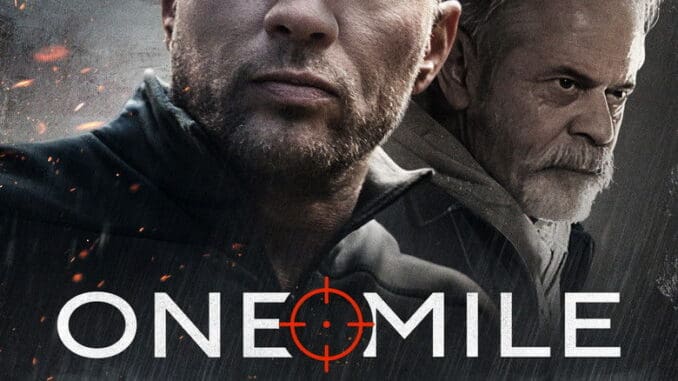
One Mile: Chapter Two
One Mile: Chapter Two, however, is worth a viewing, especially if you enjoyed the first part. The second film feels more like an extraction film. Like Taken or Rambo: First Blood, Part II, though with significantly less gunplay. By Davidson’s design, the film eschews gunfights to focus on Beckett’s intelligence as a specialist trained to use his environment to his advantage. Alex is shown to be far more resilient and resourceful in this film, as well. It all builds to a satisfying conclusion that feels almost pointedly topical, in terms of community, leadership, and how far people will follow a patriarch as he slides into madness.
Releasing the One Mile duology as two separate films on the same day was an interesting choice, and I was surprised by how and where they were split. To be honest, I was surprised that they were split at all, with each film running ninety minutes and three-hour films being terrifically common for modern audiences.
Chapter Two does suffer from a good deal of flashbacks to achieve its narrative setup. Though I appreciate the care put into illustrating Alex’s PTSD, the beginning of the film does seem to linger too long on her campus life in scenes that end up adding nothing to the overall film. Phillippe is great as Danny, a soldier without a war trying to learn to be a man, a father, and a husband. Ultimately it’s C Thomas Howell who steals the show as Stanley. A larger-than-life patriarch with a no-nonsense approach to leadership. Howell may very well be in his villain era.
I’ll admit that the reason I watched One Mile was the opportunity to interview some of the talent attached. I was able to speak with director Adam Davidson about his approach to filming two consecutive films concurrently and bringing the survival and adaptive qualities of a Special Forces soldier to life on screen.
C. Thomas Howell
But I was most excited to talk to C Thomas Howell, an actor who has been delivering powerhouse performances for over forty years. From working with Francis Ford Coppola in 1983 as Ponyboy in The Outsiders to being a frontrunner for the part of Marty McFly in Back to the Future, to the ultimately regretful misstep of 1986’s Soul Man. Howell has had a storied career.
We here at the Nerd Initiative bullpen love him most especially for his voicework in the DCAU’s Justice League: The Flashpoint Paradox and Suicide Squad: Hell to Pay as Eobard Thawne, aka The Reverse Flash, aka Professor Zoom. When I had him on a Zoom call (pun intended), I had to ask him about his stellar work on these projects and was pleased to hear he’s just as much a fan as we are.
One Mile: Chapter One and One Mile: Chapter Two are available to rent or purchase on all streaming retailers.
For more from Eric, click HERE.
Have you watched? Let us know your thoughts.

Leave a Reply