
It’s that time of year again. With San Diego Comic Con a couple of weeks away, the Eisners are just around the corner. While there are a lot of great nominees from the bigger comic companies, sometimes the smaller books get overlooked. Here are a few nominated books that may have fallen under your radar.
Beneath the Trees Where Nobody Sees: Rites of Passage (IDW) – Best Limited Series
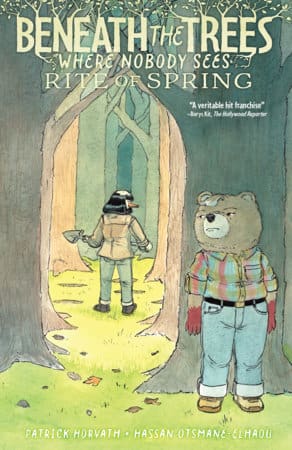
Written and drawn by Patrick Horvath, the first volume of Beneath the Trees Where Nobody Sees was a fun ride. Horvath’s sequel is set eight years after the original series. The story alternates between the first volume’s protagonist, Samantha Strong, and Monica Brewer, the sister of one of Samantha Strong’s victims, who is desperate to find her brother’s killer. While reading a cold case message board, Monica finally gets a lead in Woodbrook, Vermont, after discovering a trove of people seeking closure for Samantha’s crimes.
While this new volume feels like a slightly different type of story than the first, Beneath the Trees Where Nobody Sees: Rites of Spring proves that the first volume wasn’t just lightning in a bottle. Patrick Horvath’s anthropomorphized world feels like its own rather than a parodied take on Richard Scarry’s, as it set out to be. Samantha’s story continues, but Horvath also provides an origin that’s tragically sinister. Furthermore, a special edition of Beneath the Trees Where Nobody Sees was nominated for Best Graphic Album Reprint with the release of the Storybook Edition that boasts some bonus material from the first volume.
Trumpets of Death, by Simon Bournel-Bosson, translated by Edward Gauvin (Graphic Universe/Lerner) Best Publications for Teens
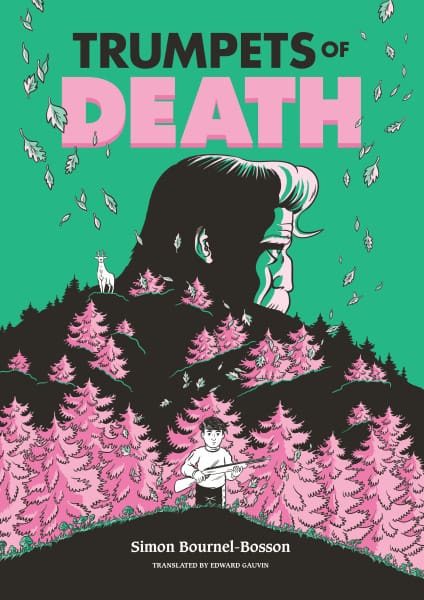
The surreal, but emotional Trumpets of Death, written and drawn by Simon Bournel-Bosson, tells the story of Antoine. Dropped off at his grandparents’ house by his dad, who is trying to find his mother, Antoine doubts he will have fun as he does not like farm life. He finds some solace in his grandmother, only to be frightened by his hulking, hunter grandfather’s short temper. He gets lost in the woods after eating a magical white mushroom that turns him into a deer. During this time, he observes the human moments we take for granted but also learns about hunting by becoming prey to his grandfather in pursuit.
Bournel-Bosson’s color choices, while simple, enhance this book and the adventure he’s created for Antoine. Its 1990s setting gives the story the right amount of nostalgia, but doesn’t overload the story. The action combined with the feeling of alienation makes Trumpets of Death relatable in a way that superheroes can’t be, but would break genre for a straight slice-of-life story.
Spent: A Comic Novel, by Alison Bechdel (Mariner Books) Best Humor
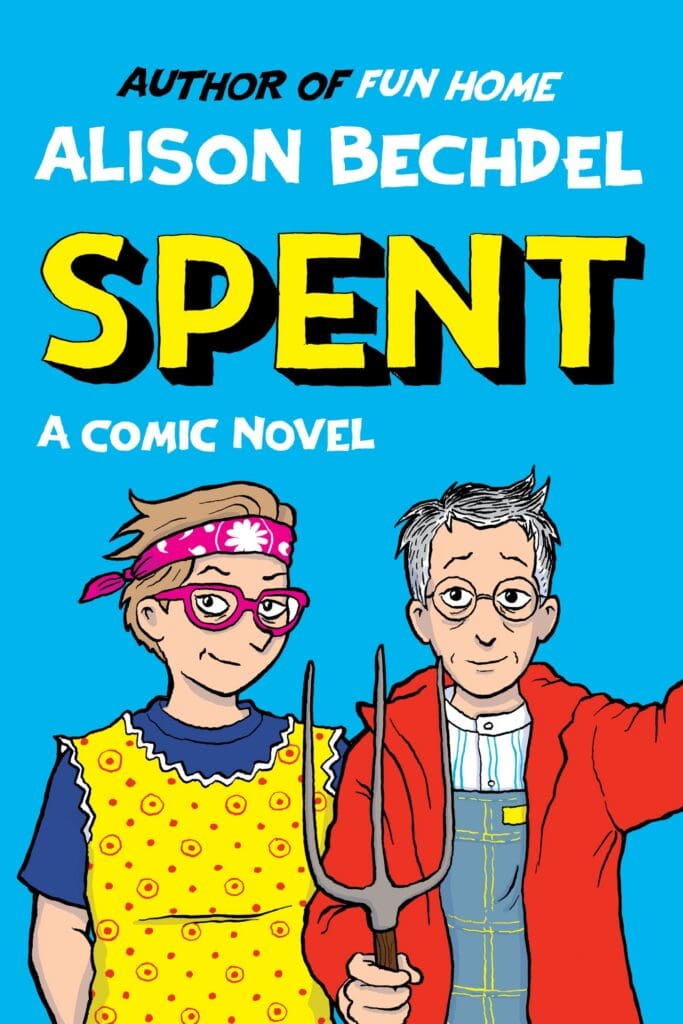
Alison Bechdel is no stranger to Eisner nominations; she returns this year with Spent. Chronicling Alison and her partner Holly’s attempt at running a pygmy goat farm in Vermont while trying to ethically sell her latest book. Bechdel processes the burnout from the hold the pandemic had on society and the country’s increasingly imminent slide into fascism. She addresses personal and professional matters, such as the adaptations of her autobiographical work with the paralleled Death and Taxidermy while debating selling her latest book to the morally bankrupt Megalopub.
There’s not so much an axe to grind as there is a lot to unpack. While Spent feels hyperbolized with some of the details, it was also human enough to be relatable. The humor is there, dealing with things like polyamory, conservatives, and the ethics of every micro-decision; all through the lens of Alison Bechdel. This book may definitely be for Gen-Xers, but I suspect that Millennials will connect in spots also. A great read from one of the best to do it.
It Rhymes with Takei, by George Takei, Harmony Becker, Steven Scott, and Justin Eisinger (Top Shelf) Best Graphic Memoir
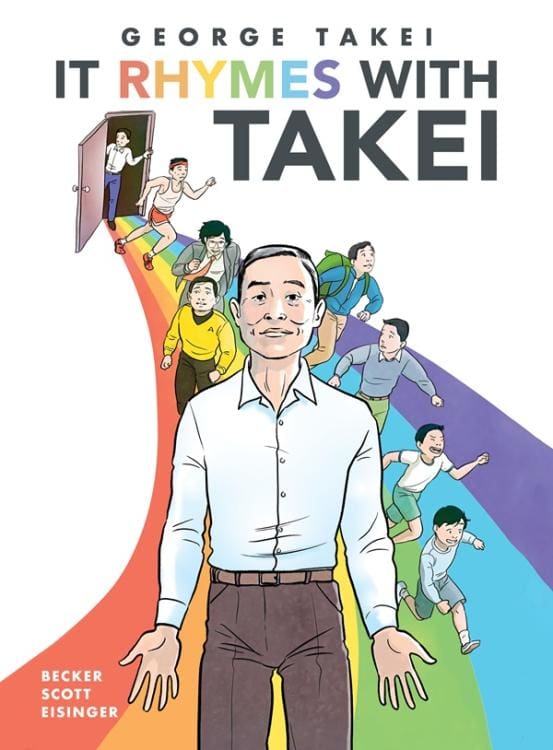
It Rhymes With Takei, George Takei’s follow-up to his 2019 critically acclaimed graphic novel, They Called Us Enemy, takes place after his time in the internment camps during World War II. Here, we encounter a world-weary Takei after his release from Tule Lake Segregation Center as he goes to college and then pursues acting. Driving the story of Takei’s past, the story is framed by the decision Takei made to out himself as a gay man after then-Governor of California, Arnold Schwarzenegger vetoed a bill that would legalize gay marriage.
Even after his release from a Japanese internment camp and the success he found in Hollywood, it’s clear Takei still felt like a prisoner in his own body not being able to show his true self until late in his life. Takei’s journey from closeted actor to frontline advocate is a fantastic read and a great addition to the medium, its Eisner nomination is well deserved.
“Blood Harvest” and “Curse Room” from Brain Damage by Shintaro Kago (Fantagraphics) – Best Short Story
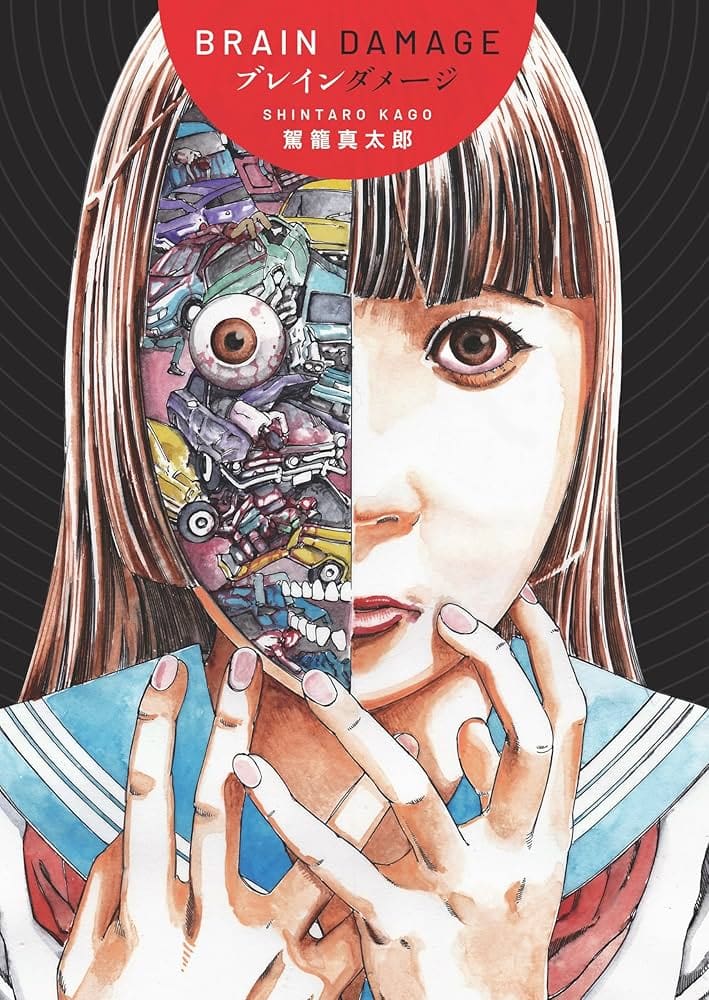
Nominated for two short stories from his latest collection, Brain Damage, Shintaro Kago’s nominated works are probably the most disturbing entries on this list. “Curse Room” tells the story of a health aide tasked with overseeing the accommodations of zombies to keep them from going crazy and going on a rampage. “Blood Harvest” unravels the mystery concerning several mangled bodies inside locked cars with no damage and very little evidence of foul play for such a gruesome crime.
Both stories are full of body horror, grotesque imagery, and surreal humor Kago is known for. These stories don’t just border on bad taste and taboo subjects they run a marathon with them. While that doesn’t mean the stories aren’t well done, it does mean that these nominees are the tamest of the bunch. Reader beware: this is not a happy read.
This Place Kills Me, by Mariko Tamaki and Nicole Goux (Abrams Fanfare) Best Publications for Teens
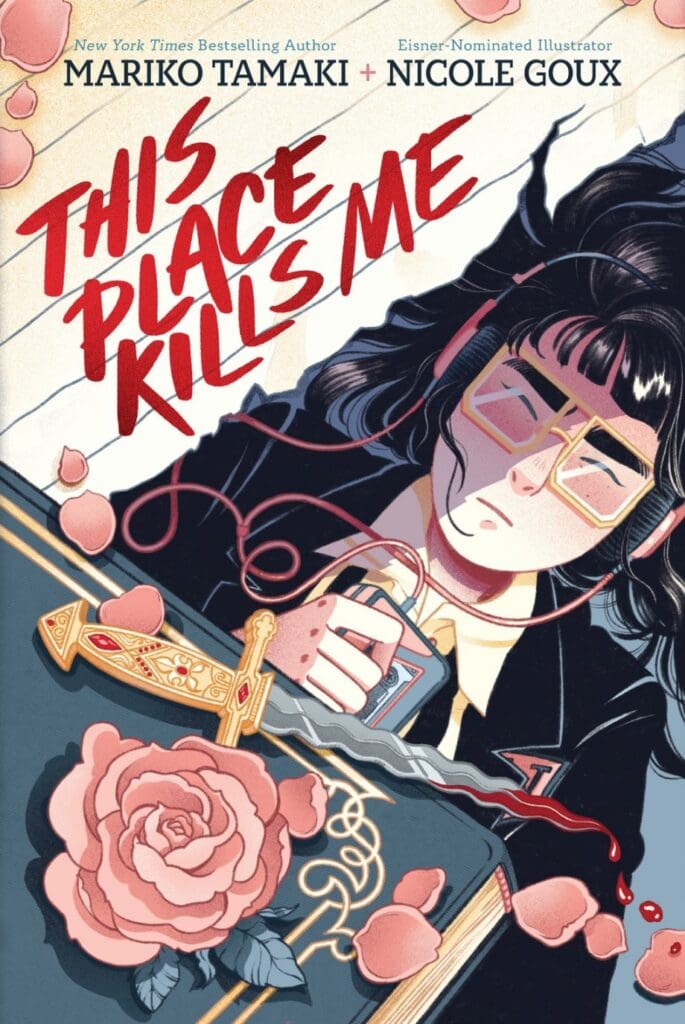
Last and certainly not least is Mariko Tamaki and Nicole Goux’s neo-noir murder mystery, This Place Kills Me. Set in the 1980s at an all-girls school, Wilberton Academy, the story follows Abby Kita as she tries to discover how one of the school’s theater students died, leading us on a twisty-turny ride that meets at the corner of Heathers and Brick. I was able to speak with the book’s artist, Nicole Goux, about the book’s nomination and her collaboration with Mariko Tamaki.
How does it feel to be nominated for an Eisner again?
I mean great, of course. Really it’s just so rare that the work you put into these things gets any sort of recognition and it’s nice to know that your time and energy and ideas are being appreciated.
What drew you to this project as an artist, and what made it feel like something you needed to draw?
Mariko and I built this story from the ground up. I’ve always gravitated toward telling stories about high school because that was a very vulnerable time for me, and for many people. It’s a time when emotions run high, we’re still figuring ourselves out, and we’re not always our kindest selves. I think telling or reading stories about it can make you feel seen and process some of the emotional quagmire that sticks around even as adults.
What was your way into the world of This Place Kills Me visually, was there a detail or design choice that unlocked the tone for you?
There’s not so much one specific thing that helped with the book, but melding the ideas of noir storytelling with ’80s high school movies was a good place to start in the development of the aesthetic.
Why did an all-girls school feel like the right setting for a noir story?
What’s more foreboding than an all-girls high school?
Your color palettes are always intentional. What guided the palette choices for this book?
I really wanted to create a tone of ominous secrets that still fit the vibe of a girls’ school. I really enjoy limited palettes because I think you have a lot of control over where you’re guiding the reader’s eye. Using a spot color is a great way to say, “Look over here.” When you have a full palette, it can be a little more of a challenge to guide the eye when there’s so much more going on, so pulling back a bit can help you clue the reader in to what’s important.
Good luck to all of the nominees whether they were mentioned here or not. While I haven’t had a chance to read all of the comics nominated, it seems this year’s batch of nominees is in a good class of books to be honored with. For the rest of the nominees, you can see a full list here.
Read more of Forrest’s articles here.

Leave a Reply