
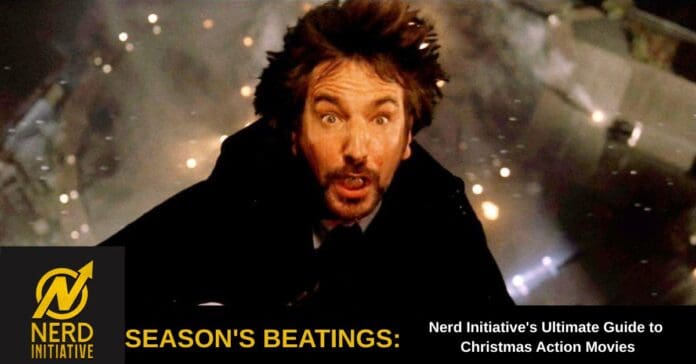
The action movie genre experienced a significant surge in popularity in the 1980s. It was common for a big summer movie to feature a villain with diabolical plans and a sometimes unlikely hero who would rise and save the day. While studios churned out action film after action film, established tropes emerged. Things like violent deaths, misogyny, and machismo were at the forefront. Still, other elements like reluctant heroes, grizzled veterans, one-liners, and thin plot lines made many of these movies a copy of a copy. Yet, while trying to make their movies unique, screenwriters in the 1980s stumbled upon a trope of their own: setting their story at Christmas time.
Christmas wasn’t an unusual time to set a movie in general. There had been plenty before the 1980s, just with way less killing. Films like It’s a Wonderful Life, Miracle on 34th Street, and White Christmas were classics from the 1940s and 1950s and are still considered classics among families to this day. Even horror dabbled in the Christmastime setting with films like Black Christmas in 1974 and Silent Night, Deadly Night ten years later. It was only a matter of time before action films took the reins and did the same.
Die Hard is a Christmas Movie
Of course, the movie everyone points to as their North Star of Christmas action movies is Die Hard. Starring Bruce Willis as New York City cop John McClane, Die Hard broke the mold in a lot of ways, not even Christmas-related. At the time, Willis was mostly known for the TV show Moonlighting, where he oozed charm as a private investigator helping solve crimes in a case-of-the-week format. A good thing for Willis is that charm is a transferable asset.
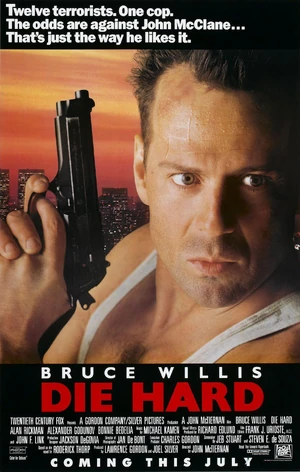
John McClane flies in to see his family in Los Angeles at Christmastime after a period of separation from his wife, Holly. Holly has since taken a job with the Nakatomi Corporation, where John meets her for the company’s Christmas party. Yet, while McClane is getting ready, all hell breaks loose when a German ex-radical, Hans Gruber, poses as a terrorist to steal untraceable bonds from a vault. Gruber is devilishly played by Alan Rickman, who was primarily a stage actor before his debut in Die Hard, but went on to play many other villains throughout his career.
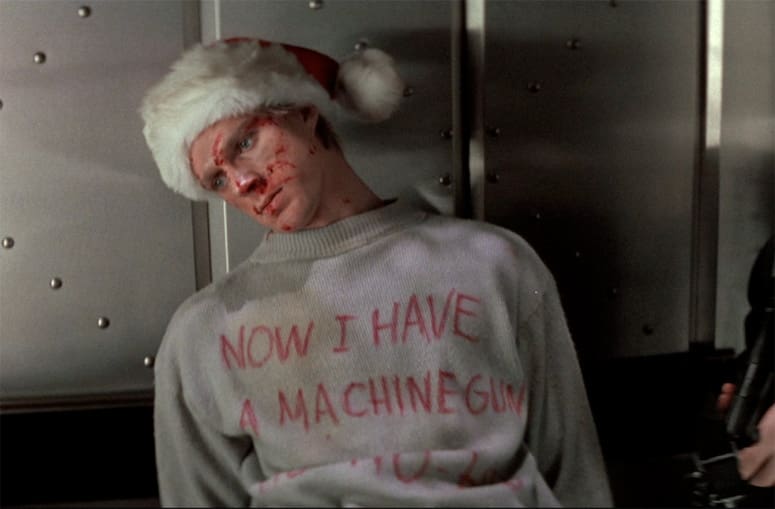
While it doesn’t exude Christmas sentiments much as some of the other movies listed here, it does have one of the best holiday-related killing aftermaths. After John McClane takes out one of Gruber’s henchmen, he sends him down in an elevator car to the floor where Gruber and company are holding people hostage. When the doors open, it is revealed that McClane has set the deceased henchman on a chair, with a Santa hat and a gray sweatshirt that reads, “Now, I have a machine gun Ho Ho Ho,” written in the henchman’s blood. It is the season for giving. Die Hard worked out so well for everyone involved; its sequel is also set on Christmas Eve, but this time at an airport.
Pre-Die Hard Holiday Action
Yet, while Die Hard is the holiday action standard, it wasn’t the first. The holiday season is a time for celebrating many things: family, joy, and togetherness. If you’re Shane Black, it’s also the best time to set the script for your film, Lethal Weapon. The film stars two of Hollywood’s most reliable faces of the time, rising star Mel Gibson and the distinguished Danny Glover in career-solidifying roles.
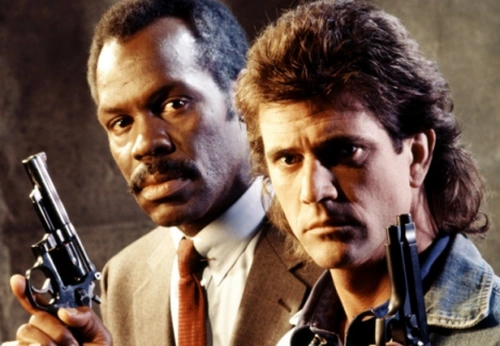
When Los Angeles city police Sergeants Martin Riggs (Gibson) and Roger Murtagh (Glover) are paired together as partners, the results are like oil and water. Murtagh’s old war buddy contacts him to help find his daughter after she dives headfirst into drugs and pornography. This sends them on the trail of Mr. Joshua (Gary Busey), an enforcer for a heroin-smuggling former Green Beret. He may be too late to save his friend’s daughter, but he’s not too late to make a new friend. Lethal Weapon screenwriter Shane Black wouldn’t return to the franchise for its sequels, but he would continue to write more action movies, specifically, The Last Boy Scout and The Long Kiss Goodnight, set around the Most Wonderful Time of the Year.
Cannon Films released Invasion USA in 1985, starring the nearly indestructible Chuck Norris. While not nearly as well-known as some other films, one of its action set pieces takes place inside a mall during the Christmas season. The plot involves a foreign terrorist’s plan to launch random attacks on civilians to destabilize the United States. While its plot isn’t centered around Christmas, one set piece unfolds in a mall during the busy shopping season. A man in a business suit leaves a bag with Christmas presents in the middle of a busy department store. When another shopper tries to return the bag to its owner, terrorists start shooting up the mall, and the package, among others, is detonated. Hope is lost until Norris’s Matt Hunter comes to save the day.
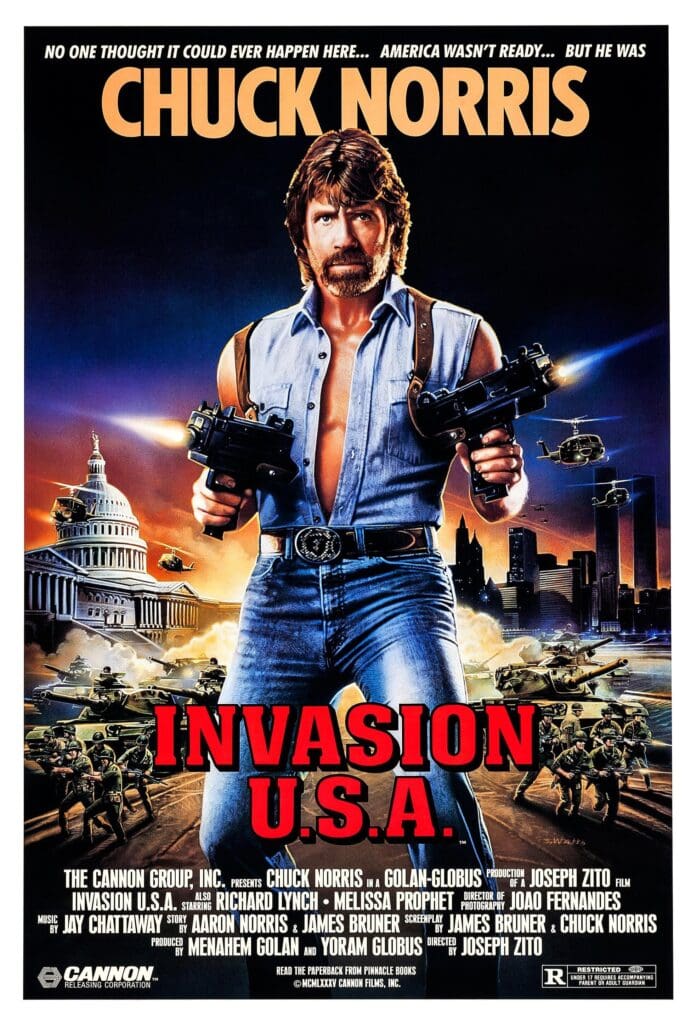
Invasion USA is not a full-blown Christmas movie, but it’s definitely the most unhinged. Here, Christmas is weaponized and used in a way to say, “If it can happen at Christmastime, when can’t it happen?” While the violence in Die Hard and Lethal Weapon is extreme, the emotional payoffs for both of them don’t just work better; they are actually present. Invasion USA uses Christmas to justify violence as opposed to using the holiday to boost forgiveness and connection.
Comic Book Movies
As time went on, studios started looking to the pages of comic books for more adaptable material. While adaptations of Detective Comics heroes like Superman and Batman go back to the 1940s, most of these were serialized shorts rather than full-length movies. After a boom of Saturday Morning cartoons in the 1970s from both Marvel and DC, movie adaptations based on characters from the Big Two started in the 1980s. These mostly kid-friendly movies became more present in pop culture as time and technology improved. As action films diversified, the Christmas setting followed, finding new meaning in these superhero stories.
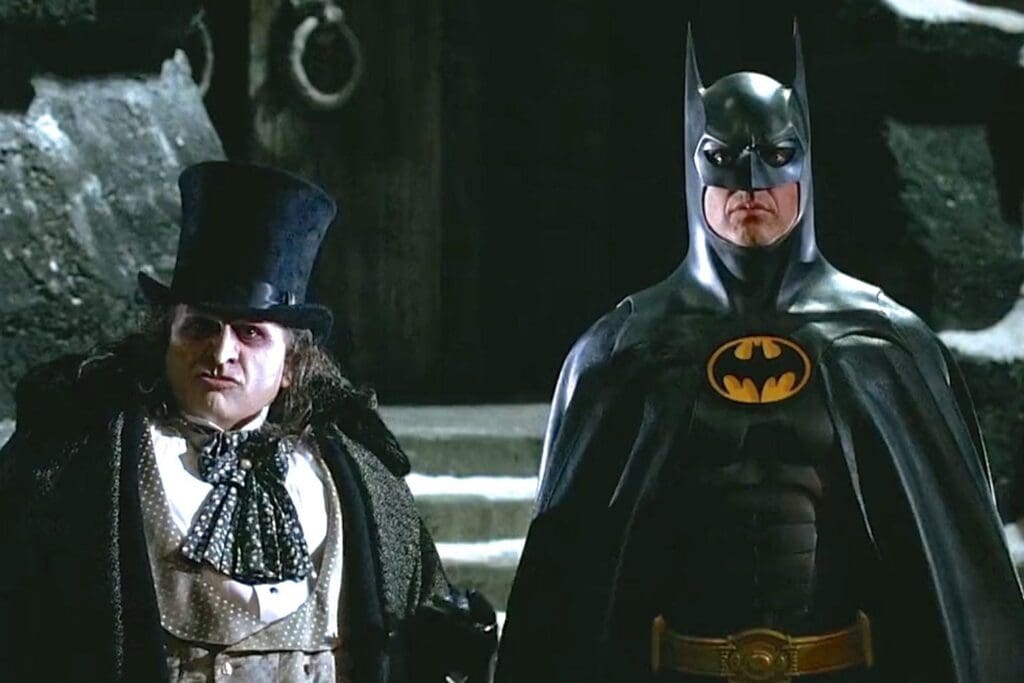
Batman Returns was released in 1992 with Michael Keaton returning as the Caped Crusader. This sequel features a snow-covered Gotham City set at Christmastime, appropriate for Batman’s main antagonist of the film, the Penguin (Danny DeVito). When he’s not being framed for pushing Gotham’s newly elected Ice Princess during Gotham City’s tree lighting ceremony, Batman is trying to keep tabs on the destructive and vengeful Catwoman (Michelle Pfeiffer) to stop her from getting revenge on Max Shreck (Christopher Walken), after he pushed her out a window. Shreck is in cahoots with the Penguin, or Oswald Cobblepot as he’d like to be known while running for mayor of Gotham City. Themes of isolation and grotesque capitalism make this a poignant entry into the Batman movie franchise.
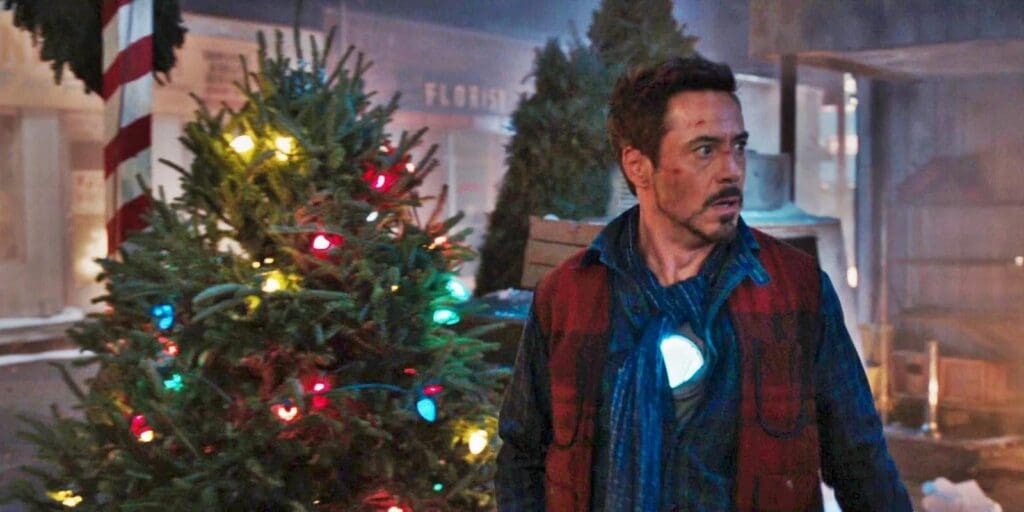
2013’s Iron Man 3 would unsurprisingly use Christmas as the backdrop when it was announced that it would be directed by none other than Shane Black. While the film doesn’t wrap Christmas around the plot like Lethal Weapon, it is absolutely part of the movie. Tony Stark is not in a good mental state after the events of The Avengers. When he swoops in to save the day, he gets himself into a situation far from home during the holidays while his isolation contrasts with the goodwill that’s emphasized at Christmastime, reinforcing the themes of identity and vulnerability. Comic book movies didn’t grasp the trope like broader action movies, but as the genre has evolved, some newer movies have embraced the holiday season fully.
Santa Claus is Taking You Down
In the last few years, the mythos of Santa Claus has been altered for a generation of adults raised on action movies. A good number of these movies even became staples of the holiday season. We’ve reached a point where Christmas is one hundred percent the plot of the movie, and Santa Claus is involved as an important part of the plot. This evolves the story of Jolly Old Saint Nick from a cookie-eating, kid-judging symbol of Christmas, content with the same schtick every year, to a burnt-out, working-class man whose wife won’t stop nagging and who would rather not do the job he’s hired to do. Two movies used different approaches to convey this: Fatman (2020) and Violent Night (2022).
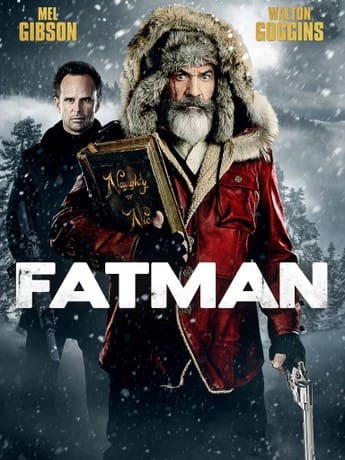
Fatman stars Mel Gibson as Chris Cringle, who is forced to partner with the U.S. military to keep his toy business from going under. Aside from that, Chris is dodging bullets after a twelve-year-old hired a hit man (Walton Goggins) to take him out after Cringle gave him a lump of coal. The film’s cynical look at Christmas is only compounded by its dark setup, which undercuts its own premise. This could be much more of an action-comedy if this wacky concept weren’t so steeped in criticism of what the holiday has become. However, Gibson’s later career screen persona lacks the charm that once made this kind of material land more lightly.
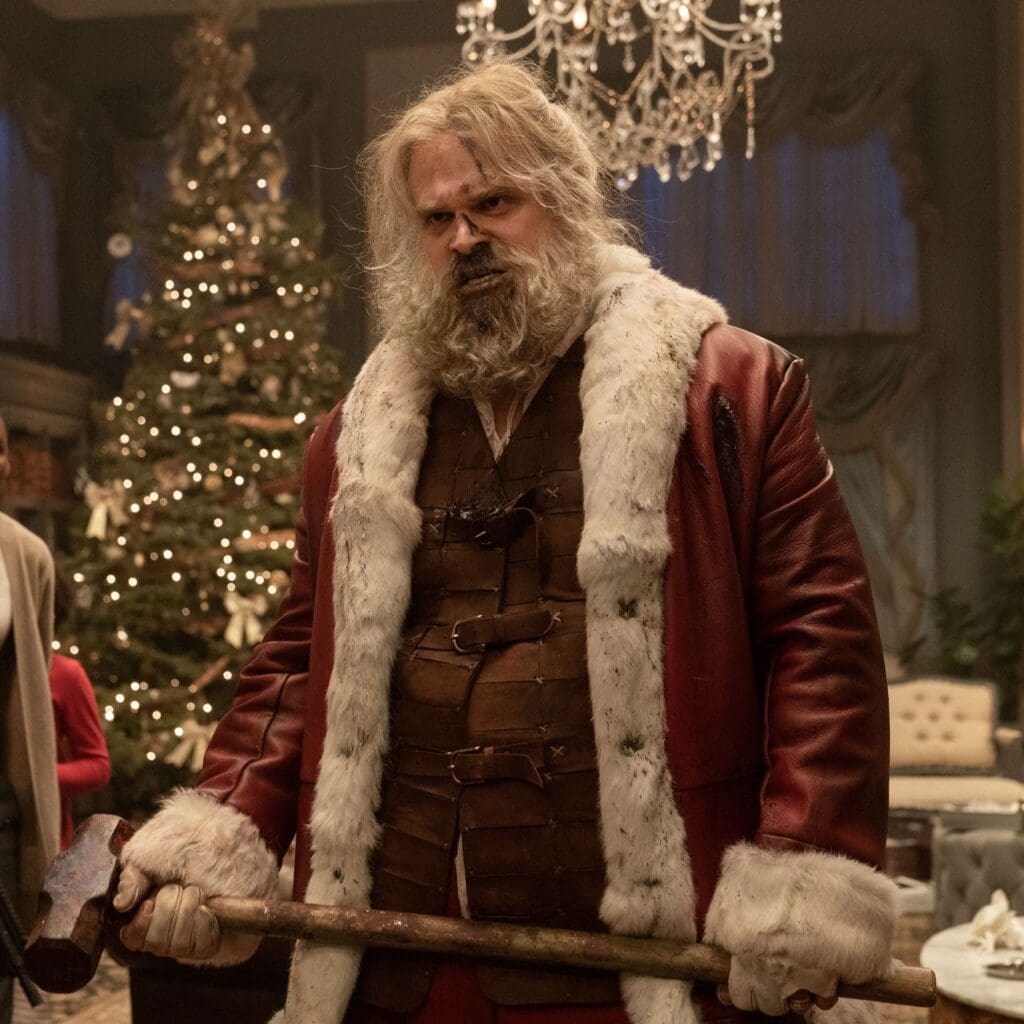
Violent Night is a different beast altogether. While the Santa Claus (David Harbour) at the beginning may be equally as burnt out as Gibson’s Fatman, he’s found other ways to deal with the stresses of being the man in red, particularly at the bottom of a bottle. While on his way to deliver presents, Santa is left behind and gets entangled in a home invasion plot by a group of mercenaries after a vault of cash is hidden on a family’s estate. Screenwriters Pat Casey and Josh Miller bring us back full circle to Die Hard, but also give Santa a Viking origin that mirrors a few other stories, albeit with different folklore.
Santa is Missing
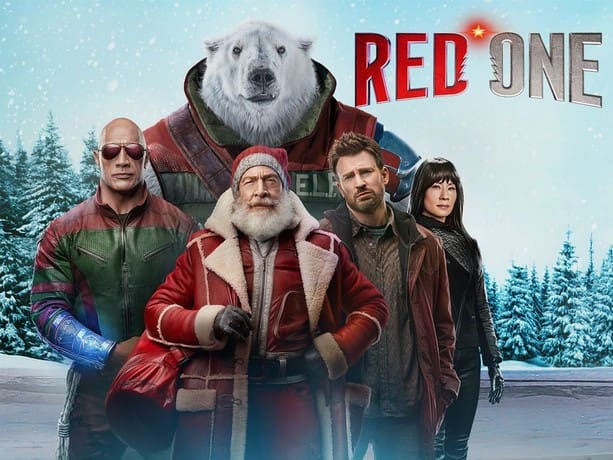
In 2024, Amazon released Red One, directed by Jake Kasdan. This time, Santa isn’t the hero; he’s the one who needs saving. Played by J.K. Simmons, Santa Claus is kidnapped right before Christmas, and it’s up to the head of Santa’s security detail, Callum Drift (Dwayne Johnson), to get him back with the help of Jack O’Malley, a weary recruit played by Chris Evans. Red One is definitely much more a family affair than Fatman and Violent Night, but it incorporates the South Pole as a big business machine with no time for slouching. I’m sure it’s debatable which of the three movies conveys the better lesson.
The movies listed here come in all shapes and sizes, much like the many different ways people celebrate at this time of year. While other genres have Christmas movies, not all of them are as exciting. For some people, it’s not Christmas until the bell rings in It’s a Wonderful Life and Clarence gets his wings. For others, it’s when Hans Gruber falls off the Nakatomi Building at the end of Die Hard. Maybe you are with me in the latter category.

Leave a Reply