
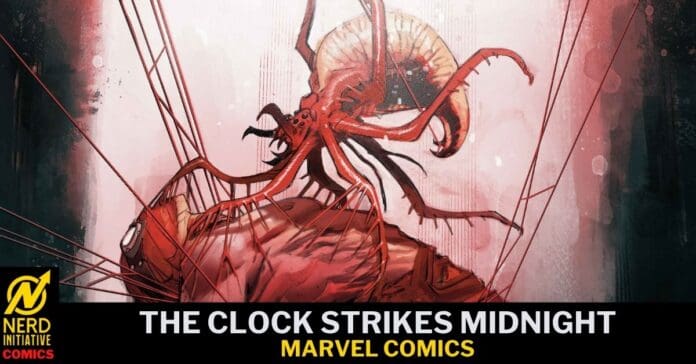
I thought Midnight Marvel was going to be some kind of What If? stuff. Lights down, costumes dirtier, one bad choice, and then the usual story with extra teeth. Peter keeps the symbiote. Rogue lifts the hammer. You clap because you recognized the trick.
It is not that. I read the three number ones that dropped today, and the trick never shows up.
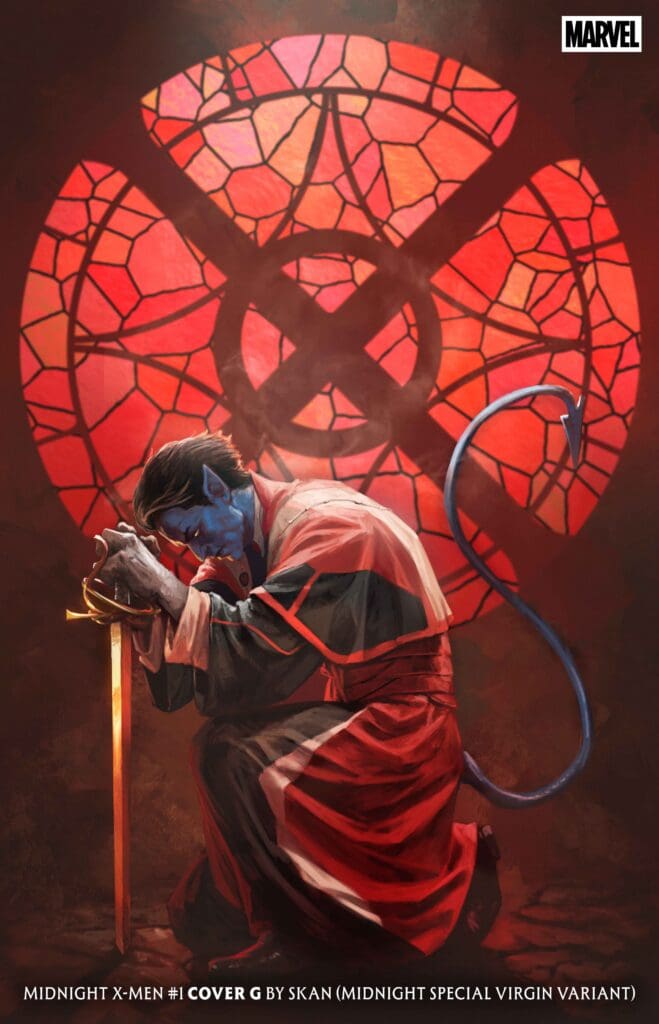
Midnight Spider-Man, Midnight Fantastic Four, and Midnight X-Men hit at the same time, which already feels like a statement. Phillip Kennedy Johnson and ScieTronc. Benjamin Percy and Kev Walker. Jonathan Hickman and Matteo Della Fonte. Same trade dress. Same little clock of light over the logo. Same letter in the back treating them as three distinct terrors that add up to one universe. That is not three guys lobbing isolated nightmares over a fence. That is a house with a floor plan.
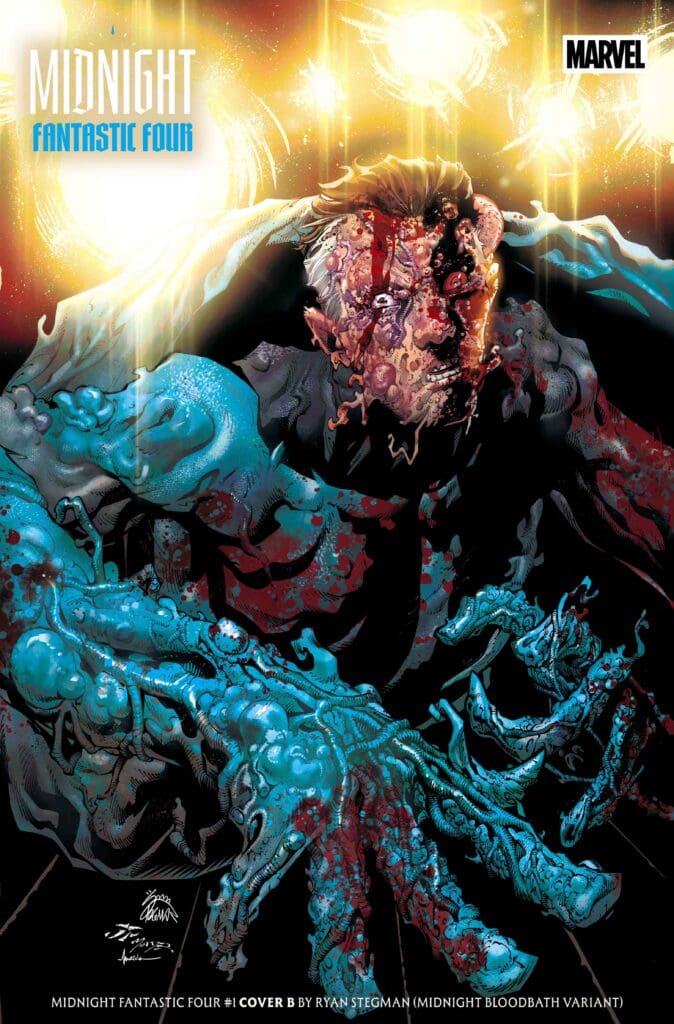
The shared-universe part is the thing people are going to miss, because it is not obvious on the rack yet. I have confirmed the goal is the whole messy Marvel promise: crossovers, team-ups, books that eventually have to look each other in the eye. That matters. Three writers playing in a sandbox with no map is a vibe. Three writers agreeing on the streets before they agree on the monsters is a project with weight. Midnight was designed to connect.
These stories are not simply alternate branches, either. Nothing is the same.
In a What If? book, you are looking at familiar people whose lives follow the usual trajectory until something twitches and the rest of the trip changes. The pleasure is recognition. You already know the song. You are just here for the wrong note.
Midnight does not offer that comfort. The names are bait. The origins arrive vaguely familiar and then refuse to cooperate. You can feel the old story under the floorboards, the lesson you thought you owned, the family you thought you knew, the dream you thought the book was about. Then the page corrects you. What you are holding is not a detour. It is a rebuild. New enough to be exciting. Familiar enough to trick your brain into waving. Disturbing enough that you curse yourself for allowing it.
And it is horror. Actual horror. Not the garnish.
Listen. For a while now, horror—in movies, television, prose, and comics—has felt bullied into a corner where shock is the whole meal. Jump scares. Gore as a high score. How gross can the panel get before you wince and turn it. I love that stuff. I will always love that stuff. But love evolves, and fright has a harder time keeping up with the actual world. A violent death on the page is not frightening anymore. We have worse, closer horrors waiting in the group chat and the hospital hallway. A story that only kills someone is entertainment with red paint.
The people who still know how to unsettle you do not attack the body first. They attack your comfort. Curry Barker and Zach Cregger have been proving the thesis on film. Loss of agency. Loss of self-control. The sick freefall of having to fight for your life against someone you call a friend or a loved one. The special nausea of watching a person find joy in dismantling someone else’s future. Those are the thoughts that sit in the skin. They fester. They make you feel ill when you catch yourself entertaining them on the walk home.
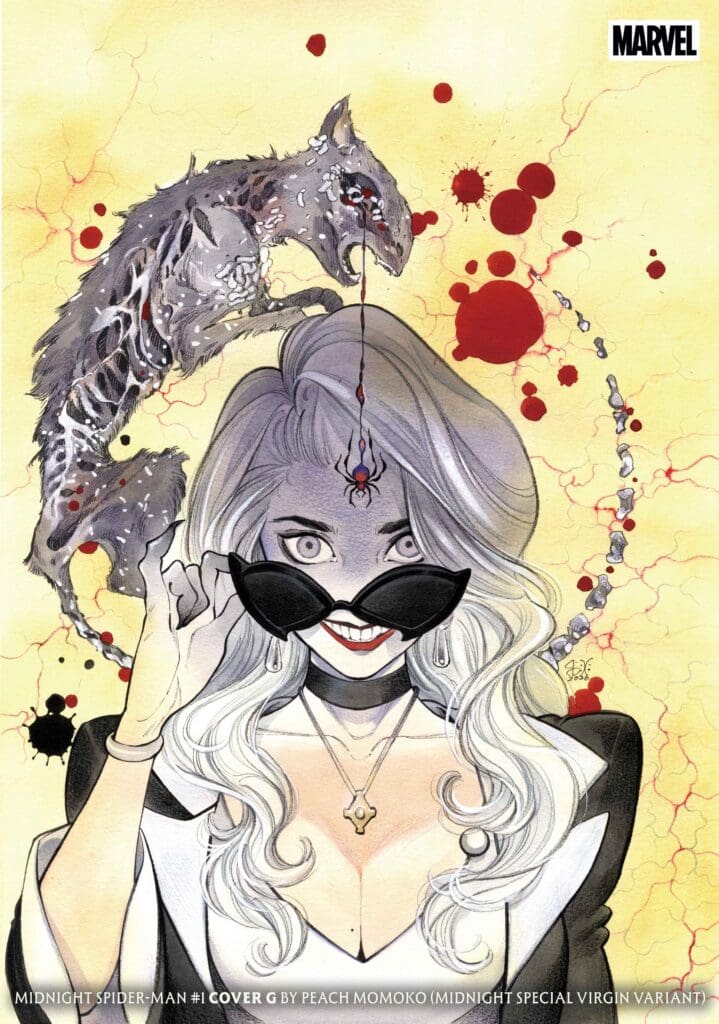
That is the frequency these three books are broadcasting on. Not “what if the hero was scary.” What if the self was negotiable? What if the people you trust were the instrument? What if power did not arrive as responsibility, but as a contagion you cannot consent your way out of?
Johnson does it by taking a moral you can recite in your sleep and turning it until it faces the wrong direction. Percy does it by making curiosity feel like the original sin, a brilliant man and the people around him walking toward a door they should not open. Hickman does it with appetite and policy, everybody holding a reason while the peace they keep invoking already sounds like a threat. Different dialects. Same illness. I am not going to walk you through the rooms. The inference is enough. You will know it when the page stops feeling like a remix and starts feeling like a trespass.
You finish an issue and you want the next one, which is the little evil at the center of great horror. An appetite for dread. You know it is bad for the nervous system and you reach for it anyway, because the discomfort is precise. It is not gross for the sake of gross. It is aimed. It knows where you live.
So no. Midnight is not some kind of What If? stuff. What If? is a detour on a road you have driven a hundred times. Midnight is a different city after dark, built by people who agreed on the map, populated by faces that almost trick you into waving, and governed by the kind of fear that does not fade when the lights come up. The light had its turn. Midnight approaches. Are you ready? Let me know what your thoughts in the comments!

Leave a Reply