
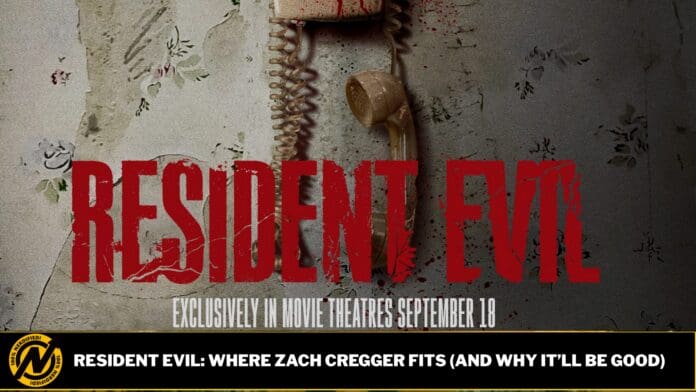
Capcom’s Resident Evil is a prime candidate for film adaptation – or so it would seem. The Japanese video game series coined the term “survival horror”, focusing on slow-burn horror, violent monsters, and corporate machinations. It’s timely yet timeless, and it’s held a place in horror video game lovers’ hearts for 30 years. It’s getting a new film adaptation too from Weapons director Zach Cregger, which has earned the internet’s disdain. For a series that should be a strong candidate for adaptation, Resident Evil has yet to produce one that satisfies fans. Let’s break them down and talk about why Zach Cregger’s Resident Evil adaptation could work, and what he’d need to do to stick the landing.
The Basics of Resident Evil and Survival Horror
Resident Evil is a video game series that’s got a pretty simple premise with roots in capitalism and American Midwest charm (and capitalism). The series focuses on the S.T.A.R.S. police team (Special Tactics and Rescue Squad) investigating a decaying mansion in the woods of the Midwestern town of Raccoon City. The mansion is filled with puzzles, strange sounds, and creepy architecture before the hapless STARS team discovers the mansion is owned by the Umbrella Corporation. They soon discover Umbrella is doing top-secret things and encouraging their employees to be hungry for success, including but not limited to getting themselves eaten by their coworkers.
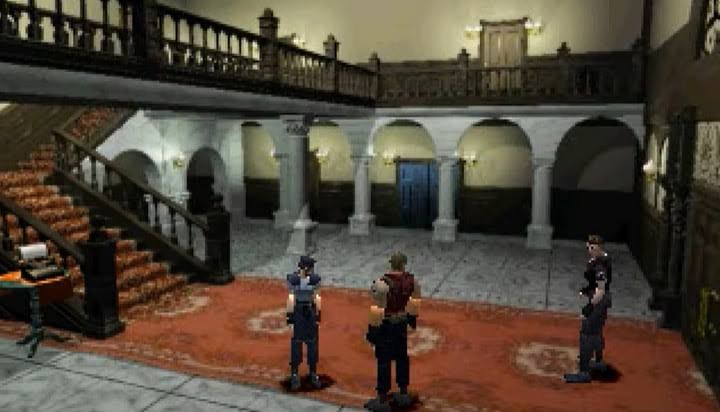
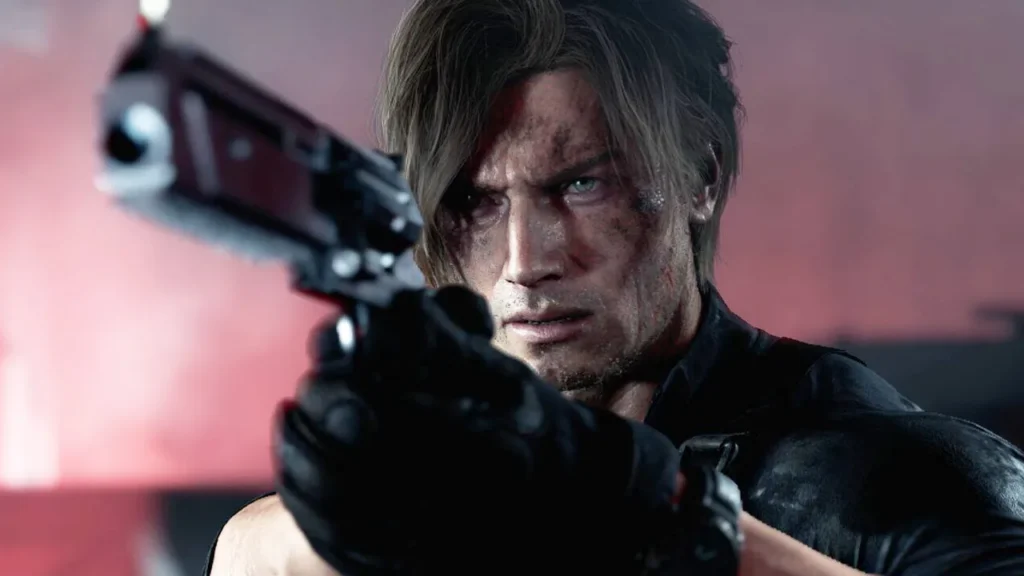
After discovering the dead walk, the STARS team investigate, barely escapes thanks to traitor Albert Wesker (it’s a long story); they end up in Raccoon City, insert state here, America. There, we meet rookie cop Leon S. Kennedy, darling of the internet and soon-to-be face of the franchise, and Claire Redfield. Claire is the sister of Chris Redfield, one of the STARS members, coming into town to meet with her brother at the perfect moment. Umbrella’s drive for advancement has infected the townsfolk who remain as dedicated as their employees to success – including, but not limited to, eating their competitors.
The dead walk, and after encountering a few of Umbrella’s top scientists and their pet projects (literal pet projects, violent pet projects), STARS, Leon S. Kennedy, and the Redfields all escape Umbrella. Things go downhill as they can only survive in a world filled with corporate profit. The corporation goes on trial; they lose all their money, and their pet projects escape into the world for other countries and corporations to snap them up.
A fine piece of fiction (in what world would a biotech company lose its money thanks to the government breaking up its monopoly?), there’s a lot that can be the meat of a great adaptation. A metropolitan city filled with zombies, a creepy mansion that started the city full of zombies. Monsters, evil scientists focused on stocks and profits, heroic first responders, and more. Capcom and the owners of the film rights, Sony Pictures and Constantin Films, have tried. They’ve tried a lot with very mixed results.
The 2000s and Paul W.S. Anderson.
There are some very specific hallmarks of 2000s action films. A soundtrack of nu-wave rock and possibly heavy synth, an ensemble cast facing a horrific threat reasonably solved by the end of the movie, and a modern look halfway between club wear and actual human clothing. Paul W.S. Anderson (Event Horizon, Mortal Kombat) combined all these things into a 7-film series focusing on an original character in the world of Resident Evil and effectively creating a new “alternate timeline” of the Resident Evil series.
It gets convoluted (very convoluted), but the basics are pretty much the same. Underneath a spooky mansion, a laboratory that looks like The Office meets Severance is infected by a viral outbreak. The employees are killed by a ‘sadistic’ AI whose motivations change throughout the series. Alice, an original character played by Milla Jovovich (an awesome actress who is incidentally married to director Paul W.S. Anderson), is taken down into the hive by a group of Umbrella Soldiers. Stuff happens; there’s a monster from the games (multiple monsters), and they escape via train (Resident Evil 2), where Alice is then taken into Umbrella to be experimented on. When she wakes up, Raccoon City is overrun. The camera focuses on a newspaper reading “The dead walk!” while she cocks a shotgun.
Both movies hold a special place in the author’s heart because they act as time capsules for a glorious era of terrible action films that flit between discussing actual issues (capitalism, evil corporations) and lots of hot people kicking ass to a hot soundtrack.
(Plus, at the time, your humble author was working at a movie theater, and as promo for Resident Evil: Apocalypse, they released newspapers focusing on the events of the film as well as the beginnings of an ARG and interactive entertainment for fans with its ad for its new “revolutionary skincare product” I’ll show below.)
The first two films (we’re going to come back to that) are actually – for the source material – a pretty solid adaptation for an Alternate Universe take. There’s an evil company; there are monsters from the game. You have a POV character (her name is Alice and she remembers everything), and you experience the horrors firsthand. It does some things the games didn’t do, which is also great. We don’t get to know the zombies in any game outside of journals and cutscenes. Anderson’s Resident Evil offers an opening sequence where you get to see 2000s corporate America at its very best.
There’s something that changes in terms of horror when you see the person who will eventually become a zombie drown when the AI realizes they’re infected and must be contained – so it naturally seals the room with the scientists doing war crimes and drowns them. Or when you see characters having rough mornings suddenly stuck in an elevator with an AI deciding to play yo-yo with the elevator’s contents.
Books are fine, and diaries are unsettling, but again, seeing the same scientist who you saw drown 20-30 minutes ago open her eyes, and her colleague who stupidly tried to break the sealed room’s glass, dragging his foot and the axe he used to try and save himself. Or the dogs before they became zombies (Rest in Peace, doggies. You aren’t getting out of any of these movies alive, which makes the fact that most of the dogs were practical very, very cool.) and their handler, who was trying to calm them down, tries to eat your protagonist’s foot. With a kick-ass soundtrack from composer Marco Beltrami slamming synth with new metal, the scene where you first encounter the former employees after their metamorphosis is genuinely unsettling for an action movie.
You don’t have as much investment in the sequel, which does introduce the main characters from the games (albeit in a very rushed way) and finally has Alice meet her so-called peers. The audience (the players) have leveled up, and now it’s time to play with the actual characters. Sure, some names are mixed up (awkward). Sure, you might get confused since the Ashfords are supposed to be evil (very awkward). Sure, you might have heard the name Birkin at the end of the first film and be desperate to see your favorite villain, only to have him be replaced by Jorah Moremont.
Still! Zombies! References that actually lead somewhere! Sure, Alice is suddenly more broken than a player’s brain when they discover the shirtless Leon S. Kennedy mod for Resident Evil: Requiem (yes, it is a thing; it’s glorious- go look it up).
You can pretend movies 3-6 don’t exist. The films lose their amazing early 2000s soundtrack (I can hear every weird millennial high schooler scream with glee, then recoil with a disgusted look when you realize some of the first songs on the soundtrack are composed by Marilyn Manson. Yes. Ew. Focus on A Perfect Circle, featuring Tool frontman Maynard James Keenan, from the sequel!) and become a zombie-like slog. You can’t leave them alone because they might do something (like come out of the theater and somehow ruin other good movies), but you desperately want to. Every game character becomes a running joke; Alice becomes the definition of OP and broken in the gamer sense. The first two? Keep them. Enjoy them. From the cringe to the absolutely fabulous, they are a time capsule. Less can be said for their follow-ups, the series reboots, and more.
Welcome to Raccoon City, Netflix Series, and the actual pandemic:
Welcome to Raccoon City (2021) was billed as a more faithful adaptation of the games – and it was! The problem was it was almost too faithful. It was a retelling of the story; it featured characters from the games (great ones- Lisa Trevor and others! but there was just something off about it. Maybe it was the casting choices; maybe it was the character choices (Leon was a rookie, but was he too rookie? Is that a thing?). If the first Resident Evil was a bad hamburger, this one was a decent hamburger from a fast food place that buys higher quality ingredients. It still tasted the same, but it wasn’t particularly what fans were looking for.
There were parts of it that were good (Birkin and wasn’t too bad), but Wesker was a massive miss. Apparently working for an independent contractor and not Umbrella, he “dies” at the end. (Wesker never dies. Wesker not dying is like death and taxes, a universal certainty. He’s as bad as William Afton, who famously always comes back.) Sure, he ends up surviving, just not because he was willing to be slimy and betray both his friends and the corporation he worked for – which he was betraying his friends with. Part of the fun of the character is the betrayal! He betrays both the STARS team and Umbrella! He’s entirely out for himself! He’s a sleazy tyrant! He’s a monster! He’s great! Making him a run-of-the-mill cop who was bribed to kill Birkin (who was his company rival/best friend!) and steal his work ruins so much! There’s a lot more (a lack of the famous Mr. X, for one), and the fan service (“mm. Another Jill sandwich”) was too much. If possible.
No. It wasn’t perfect. Then came the Netflix series…
Truth be told, to accurately review the series, I would have had to watch it – and it was too out there even for your humble writer. Not the casting (Lance Reddick as Wesker can pull it off) or the location (The writer doesn’t want to be specifically vague here, but if you search “Starbase Texas” you might understand why what Umbrella is doing with its corporate town makes sense.) It’s not even the writers (giant spider? spider!), but there is something unnerving about it. If we’ve discussed the flavors of hamburgers from gross to halfway decent, this is a salad. It’s a thing. It’s an interesting thing, but out of all the adaptations, it’s the one that your writer (in their humble opinion) thinks just had a label slapped on it, calling it “Resident Evil.”
No. Fans deserve steak. They’ve had burgers. They’ve had salad, it’s time for a good juicy steak…
Cregger’s adaptation, and why it’ll be good (Or. well. Could be good.)
Zach Cregger’s Resident Evil has been the subject of controversy. It’s been bad, so bad that the director has felt like he’s on an apology tour. Fans might have a point, pointing out that references seen in images are wrong and that the idea he took out jokes, and that there were a lot of them, is rubbing people the wrong way. People excited for the film might also have a point. Multiple trailers have dropped; the atmosphere looks perfect. There’s blood, a glimpse of a zombie, and while he’s straying away from the traditional monsters apart from dogs and zombies (not particularly a point in your favor, Zach), lockers are a must for Raccoon City. They look like big naked raccoons!)
Cregger has talked about how he wants to do something different. That difference looks promising. His “snow,” while criticized, allows for that incredibly creepy shot in the trailer of the first zombie Bryan encounters to make crunching sounds as she bolts through the snow, which are then overlaid throughout the rest of the trailer (upsetting). There are babies (horror movie traditions of don’t kill the dog or the baby are going out the window, apparently), and Bryan is probably the most relatable protagonist in any part of the franchise.
Seriously, Bryan is what makes the world exciting because if, as Cregger says, he has ideas for sequels, setting a tone with Bryan is a perfect way to build the world for new audiences. Bryan is the ultimate player character. He has no combat training, he apparently progresses just like the games, and he’s cracking jokes like a streamer in the middle of a Requiem playthrough. He is the embodiment of a fan, yet fans are upset.
Bryan, however, defies the logic of the first few films. He’s not an overpowered clone of a corporate daughter who belongs to like five different people (Alice). He’s not an adopted medical experiment in a South African company town (The Wesker twins). He’s just – a dude. Fans want to feel empowered when they play the games, but what better way to empower the audience than to demonstrate the same frustrating progression we all have to go through? Yes, the Kennedy reference on the gunshop is stupid (it might not even be real). Yes, the rumored change to the police vest is especially stupid (it might be cut!). For the first time, however, the player is the focus of the world, and I’m willing to give that a shot.
In the movies, we know too much. We know what the Umbrella scientists were like before drowning and being blown up. We know what Claire and Chris’s childhood was like. There are even animated films where we can get a look at the actual story. In live action, we don’t know the world of Cregger’s Resident Evil yet, but he’s promised that the games – not the story but the games -are the focus. He’s also promised sequels which could bring the characters to the forefront.
Much like a house (or a good steak), you put the materials in, then cook it. Cregger seems to be doing that. He’s made some mistakes that fans might take issue with, but as the internet says, “let the man cook” before fans pass judgment. If you break down the strengths between the movies we have so far – the world-building around an original character, and the mention of original characters themselves (something Cregger still needs to prove himself with) we could have the makings of a great film. Provided it gets to a sequel.

Leave a Reply