

Christopher Nolan’s blockbuster Odyssey has scored a record $ 303 million worldwide, the impressive feat signaling that there might be a return of the sword-and-sandals genre in Hollywood. Popularized in the 1950s, sword-and-sandals epics, also known as biblical epics, predate the spaghetti western and have shaped some of Hollywood’s early film series.
Originating in Italy, sword and sandals stories and biblical epics predate modern film going audiences. One of the first films, 1911’s Agrippina, was only 19 minutes long but demonstrated the interest in the genre. Others followed including several that featured including one of the first recurring characters in cinema – Maciste. Maciste ties swords-and-sandals epics with modern superheroes. Making his debut in the 1914 film Cabiria, the character (created by Gabriele d’Annunzio and Giovanni Pastrone) used his feats of strength to rescue princesses, slay Gods, and act as an unofficial grandfather to figures like Conan the Barbarian, He-Man of Eternia, and Steve Rogers. As films became an international business, Maciste’s name was changed to reflect more popular figures like Hercules, Sampson, and others.
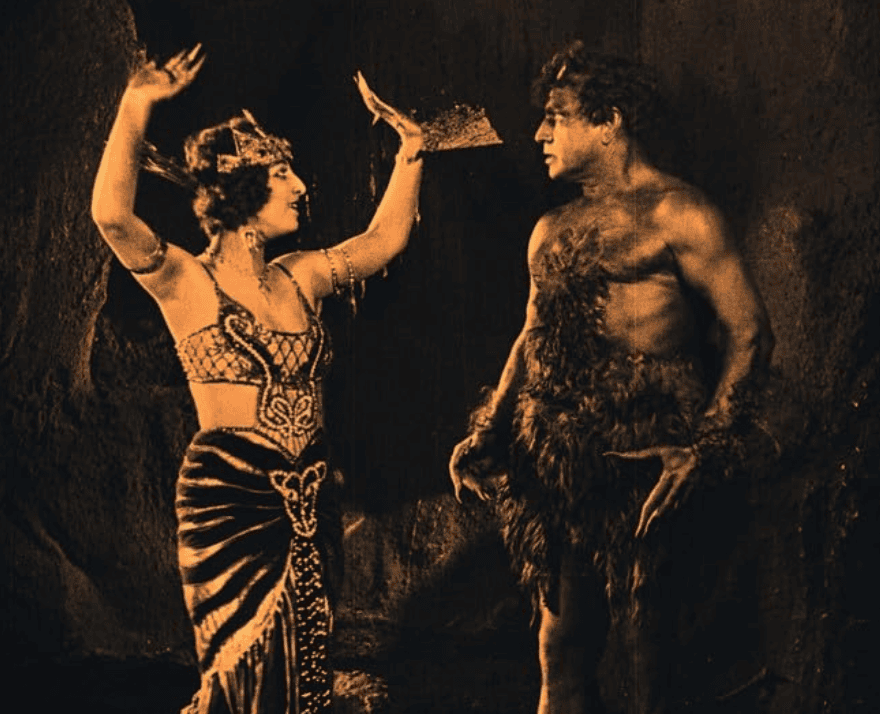
IMAGE FROM ANTIGONE (CLASSICS OF THE 21ST CENTURY) DEPICTS BARTOLOMEO PAGANO AS MACISTE IN HELL (1925)
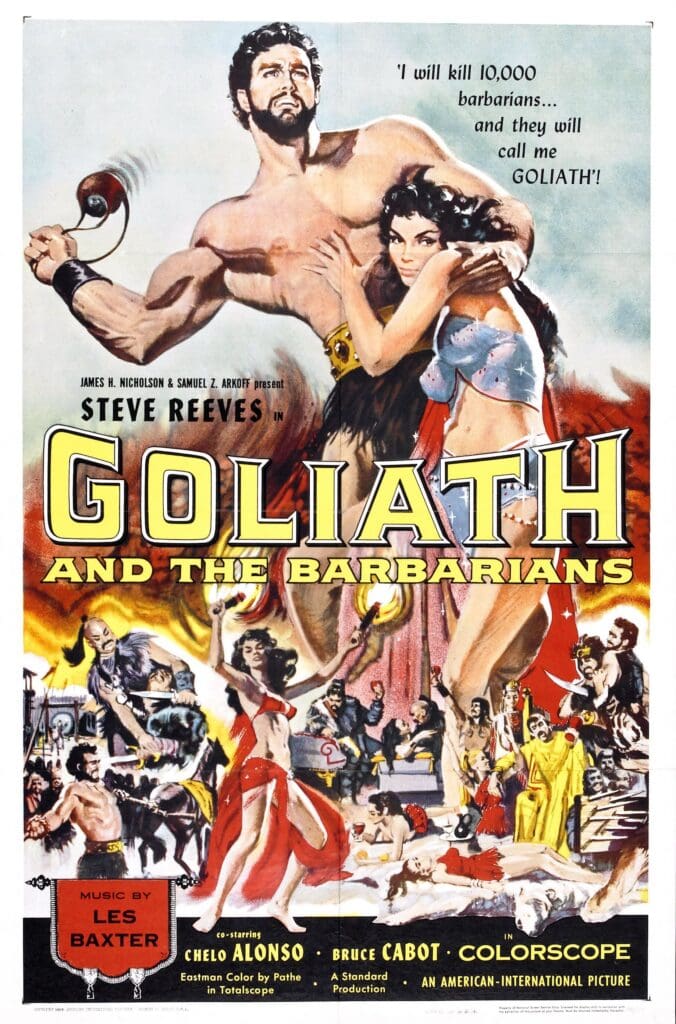
These epics weren’t without their controversy. The genre saw a resurgence in the 1950s, when it received wider audiences and became a focus of Italian cinema. Italian directors, famous for experimentation, would push it to new heights. Critics found the characters childish. Missing the experimentation of original stories, these features all had a similar through line. There was always a group rebelling against oppressors (gladiators, enslaved people), always someone to save (a princess or priestess), and always some monster to slay. Dubbed Peplum (a Greek garment used for casual wear), critic Robert Rushing said-
“In its most stereotypical form, [FILM] depicts muscle-bound heroes (professional bodybuilders, athletes, wrestlers, or brawny actors) in mythological antiquity, fighting fantastic monsters and saving scantily clad beauties. Rather than lavish epics set in the classical world, they are low-budget films that focus on the hero’s extraordinary body.”
The films would focus instead on audience entertainment and box office returns. Ridiculed for their bad dubbing and poor production value, the formulaic films reached their peak from 1958 to 1965 and spanned multiple genres, series, and even media ranging from film to television. Every country found a hero, every country found a dragon to slay, and much like superheroes, spaghetti westerns, Eurospy films, and other genres rising and falling, the sword-and-sandals epic won the hearts of audiences. The films were phased out by the spaghetti western (more Italian cinema) and the Eurospy film, but it remains a beloved genre. It saw a resurgence in the 1980s with characters like Conan and He-Man, returning audiences to a simpler time of swords, dragons, muscular heroes, brave heroines, and femme fatales.
Peplum and the biblical epic film clash in Nolan’s Odyssey. Epic films are less a genre and more a title given to a film grand in scope and sweeping in production value. Films like Ben-Hur, Italy’s Cabiria, and How the West Was Won compete for the title with films like 2001: A Space Odyssey and the Star Wars movies. The difference between Epic Films and the beloved peplum- common, simple, and a little silly teaching people that heroism isn’t just superpowered but armored and possibly fighting with a sword can either be a cinematic masterpiece or a way to catch up with the cultural zeitgeist. The debate, very clearly illustrated between Masters of the Universe, Amazon’s adaptation of the popular 1980s cartoon, and Nolan’s Odyssey, is prime to be reignited. What defines an epic piece of filmmaking that shapes a generation versus what an audience enjoys?
The answer based on historical precedent, is whatever the audience wants to see. 8 shots and 7 inter titles would eventually lead to 3 hours of an epic, filmed entirely on a 70 mm IMAX camera so powerful that it would burn projectors down to a film that did not break even at the box office but jumped to the number one spot on Amazon’s streaming charts makes it clear. History repeats itself in both story, character, and audience taste. What matters is less the product and more what individuals let sweep them away for two hours at the movies.
Do you think that the Odyssey is a sweeping epic or a typical sword and sandals type adventure? Let us know in the comments below!
